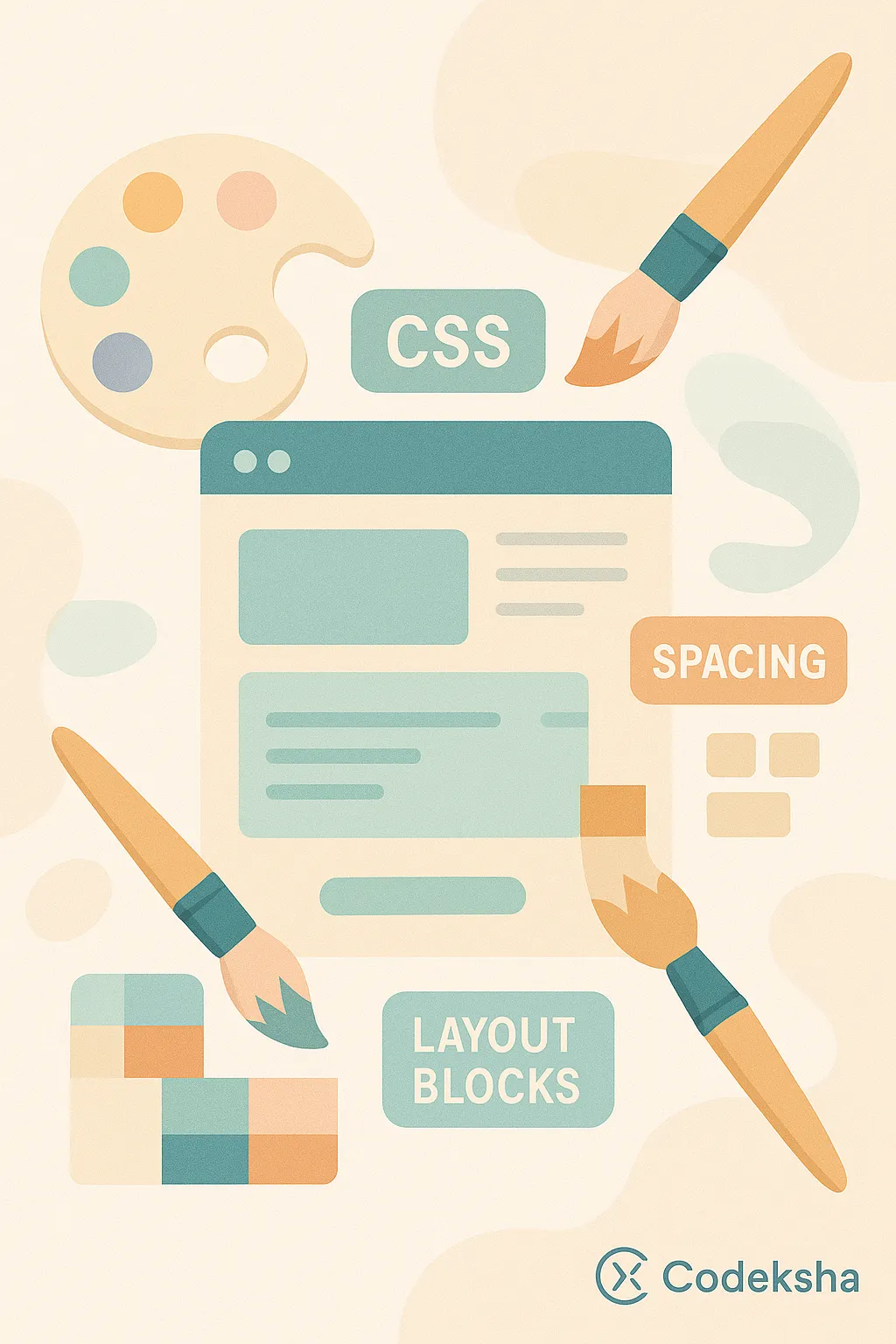
Before CSS existed, styling a web page meant mixing presentation directly into HTML - fonts, colors, and layout were all crammed into markup attributes. CSS was invented to separate how a page looks from what it contains, and that one decision changed how the entire web was built.
The Original Proposal
Cascading Style Sheets were proposed by Hakon Wium Lie in 1994, while he was working alongside Tim Berners-Lee at CERN. The idea was to let a single stylesheet control the appearance of many documents at once, and to let styles 'cascade' - meaning multiple style sources (browser defaults, author styles, and user preferences) could combine with clear rules about which one wins. CSS1 became a W3C recommendation in 1996.
The Slow, Painful Rollout
Early browser support for CSS was inconsistent and often buggy, which is why many developers in the late 1990s and early 2000s still relied on HTML tables for page layout - a workaround that had nothing to do with what tables were meant for. CSS2 (1998) and CSS2.1 improved things, but truly reliable, cross-browser CSS layout support didn't really arrive until the 2010s.
From Floats and Hacks to Flexbox and Grid
For years, developers built layouts using float properties and elaborate hacks never designed for full-page layout. That changed with Flexbox (widely supported by 2015) and CSS Grid (widely supported by 2017), both purpose-built layout systems that finally let developers build complex, responsive layouts without workarounds. Modern CSS also added variables (custom properties), animations, and media queries for responsive design - the foundation of how sites adapt to phones, tablets, and desktops today.
Why This Matters When You're Learning CSS
If CSS ever feels inconsistent, it's because it evolved over three decades with backward compatibility as a priority - old techniques were rarely removed, only added to. Learning CSS today means learning the modern layer (Flexbox, Grid, variables) while still understanding the fundamentals (the box model, specificity, the cascade) that haven't changed since CSS1.
Frequently Asked Questions
Do I need to learn Flexbox and Grid, or just one?
Both are worth learning. Flexbox is generally better for one-dimensional layouts (a row or a column), while Grid is built for two-dimensional layouts (rows and columns together). Most real projects use a mix of both.
Is Bootstrap still relevant if I know CSS well?
Yes. Frameworks like Bootstrap speed up development with pre-built, tested components, which is valuable in real client work even for developers who understand CSS deeply.
Ready to Learn Web Development in Rajkot?
Book a free demo class and see Codeksha's classroom, project-based training for yourself.
Book a Free Demo Class