HTML is the oldest of the three core web technologies, and understanding where it came from makes it much easier to understand why it works the way it does today.
Where HTML Started
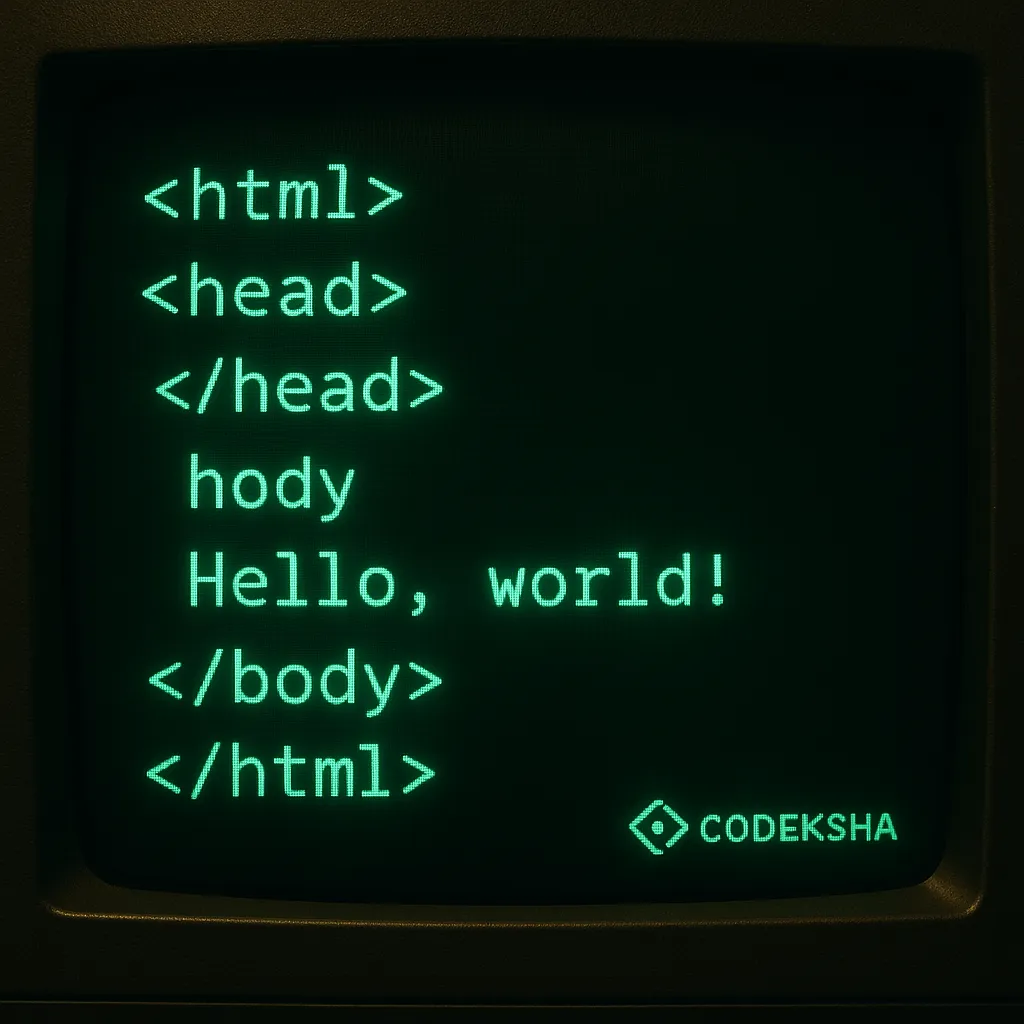
HTML (HyperText Markup Language) was created by Tim Berners-Lee in 1990-91 while he was working at CERN, the European physics research organization. He needed a simple way to link scientific documents together so researchers could jump between related papers - the earliest form of what we now call a hyperlink. His original specification described fewer than 20 tags, most of which (like <p>, <a>, and heading tags) are still in use today.
Standardization and the Browser Wars
Through the 1990s, HTML evolved quickly as competing browsers (most notably Netscape and Internet Explorer) each pushed their own extensions to the language. This period, often called the 'browser wars,' led to inconsistent rendering and a lot of frustration for early web developers. The World Wide Web Consortium (W3C) was formed in 1994 partly to bring order to this - publishing HTML 2.0, 3.2, and eventually HTML 4.01 as agreed-upon standards that browser makers could build toward.
The Shift to HTML5
HTML5, finalized by the W3C in 2014, was a major turning point. It introduced semantic elements like <header>, <nav>, <section>, and <article> that describe the meaning of content, not just its appearance. It also added native support for audio and video (removing the need for Flash plugins), the <canvas> element for graphics, and form input types built for real-world use cases like email, date, and number fields.
Why This History Matters for Learners
Knowing this history explains a lot of HTML's quirks - why some elements feel dated, why semantic tags exist alongside generic <div>s, and why HTML was designed to be forgiving of small mistakes (unlike stricter languages). When you're learning HTML today, you're working with a language shaped by three decades of real-world use, not a clean-slate design.
Frequently Asked Questions
Is HTML a programming language?
No. HTML is a markup language - it structures and describes content, but it doesn't have logic, loops, or variables the way programming languages like JavaScript or PHP do.
Do I need to learn old versions of HTML?
No. You should learn HTML5, the current standard. Understanding the history is useful context, but all modern development uses HTML5.
Ready to Learn Web Development in Rajkot?
Book a free demo class and see Codeksha's classroom, project-based training for yourself.
Book a Free Demo Class